comparative · Article
CBTC vs ERTMS Hybrid Level 3: How Close Are They Really?
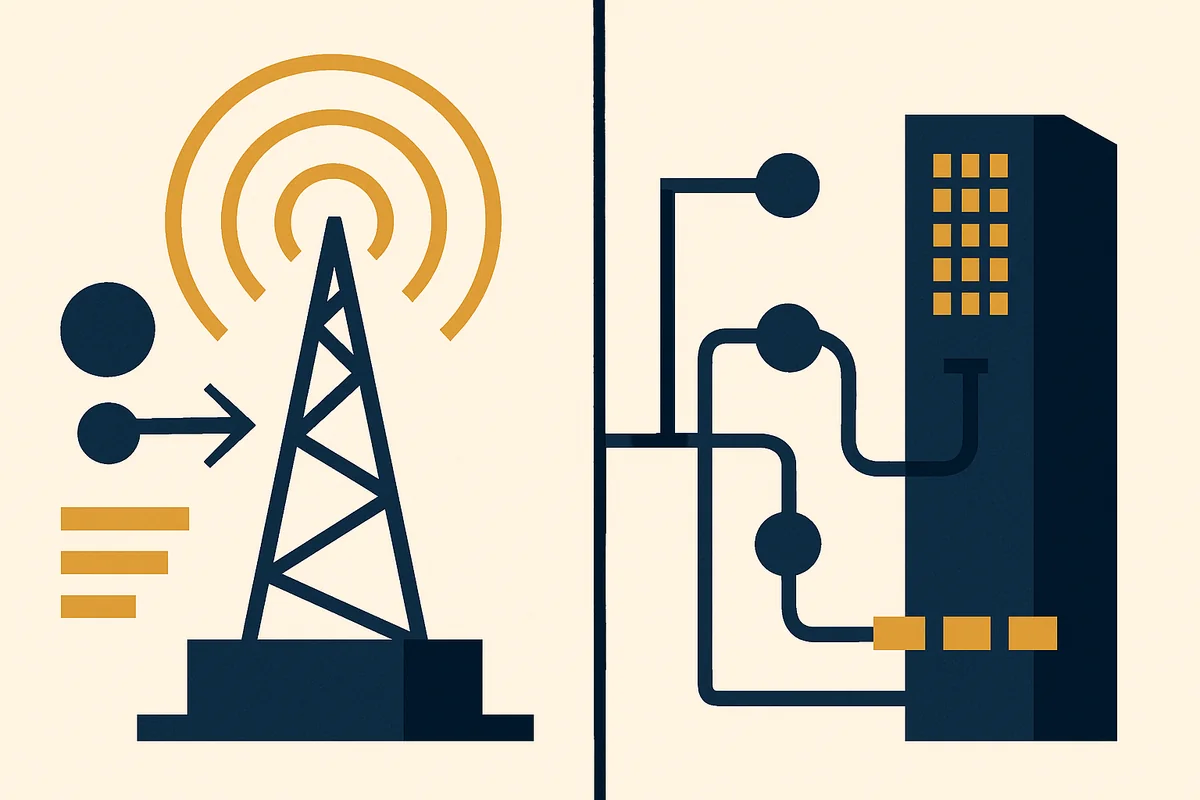
For two decades, the cleanest answer to “what does CBTC look like for mainline rail?” was “ETCS Level 3,” and the cleanest answer to “where is ETCS Level 3 deployed at scale?” was “nowhere.” The European Train Control System (ETCS) Level 3 specification anticipated moving-block operation on mainline rail with continuous train-to-wayside communication, train-integrity reporting, and the elimination of trackside train-detection equipment. The architecture promised the capacity benefits that Communications-Based Train Control (CBTC) had delivered to metros, applied to high-speed and freight corridors. In practice, the safety case for fully removing trackside detection on mainline rail proved difficult; deployments stalled. The compromise that emerged is ERTMS Hybrid Level 3, which keeps reduced-functionality trackside detection while extracting most of the moving-block benefit. The CBTC vs ERTMS Hybrid Level 3 comparison has become genuinely interesting in 2026 because the two systems are visibly converging on similar functional capabilities while remaining categorically different procurement decisions.
Two architectures, two regulatory worlds, one converging set of capabilities
CBTC is a metro-grade architecture governed by IEEE 1474 in the United States and IEC 62290 internationally. It is the dominant signaling technology for urban rapid transit, with deployments in dozens of cities and operational maturity stretching back to Vancouver SkyTrain’s 1985 opening and Paris Métro Line 14’s 1998 commissioning. The institutional environment is the Federal Transit Administration (FTA) in the US and the corresponding metro regulators internationally.
ERTMS Hybrid Level 3 is a mainline-rail architecture defined within the European Rail Traffic Management System (ERTMS) program, governed by ETCS specifications under EU Agency for Railways (ERA) oversight. It is the most recent extension of the ETCS family that already includes Level 1 (intermittent communication, traditional fixed-block signaling), Level 2 (continuous wireless cab-signaling with fixed-block separation), and the long-anticipated Level 3 (continuous wireless cab-signaling with moving-block separation). Hybrid Level 3 sits between Level 2 and Level 3: it adds moving-block operation for trains that report integrity, while retaining trackside detection for trains that do not. (For the Level 2 baseline, see CBTC vs ETCS: A Side-by-Side for US Engineers.)
The capabilities are converging because both systems now offer continuous bidirectional communication, moving-block separation, high-resolution train position reporting, and integrated automatic train protection. The procurement decisions remain different because the regulatory environments, vendor ecosystems, fleet types, and operational profiles are different.
How ERTMS Hybrid Level 3 differs from full Level 3
Full ETCS Level 3 promised moving-block separation with no trackside train detection. The train would report its own position and integrity (the assurance that no part of the consist had separated from the rest), and the wayside would compute Movement Authorities based on those reports alone. The architectural elegance of full Level 3 was that it eliminated track circuits, axle counters, and the entire trackside-detection inventory, with the cost savings and the maintenance benefits that implied.
The deployment problem with full Level 3 is the integrity reporting. A metro fleet is largely homogeneous, owned by a single operator, with strict maintenance discipline; train-integrity reporting can be engineered into the rolling stock. A mainline rail corridor carries freight trains, intercity trains, regional trains, and historic stock from multiple operators across borders. Mandating onboard integrity reporting for every train that uses the corridor is a coordination problem that has no clean technical solution. A corridor cannot eliminate trackside detection if even a fraction of the trains using it cannot report their own integrity.
Hybrid Level 3 is the engineered compromise. It introduces moving-block operation for trains that can report integrity, layered on top of reduced-functionality trackside detection (typically axle counters at strategic locations, not full track-circuit coverage) for trains that cannot. A mainline corridor under Hybrid Level 3 supports modern integrity-reporting trains at moving-block separation while continuing to support legacy trains at fixed-block separation, with the wayside automatically falling back to the more conservative authority calculation when the train type warrants it.
The result is a system that approximates the capacity benefits of full Level 3 for the trains that can use them, without forcing the corridor to abandon legacy traffic. The first revenue Hybrid Level 3 deployments are now in operation in Europe, with ongoing work to expand the deployment base and refine the operational procedures.
How CBTC and ERTMS Hybrid Level 3 line up architecturally
The two architectures share a remarkable amount of structural DNA. Both use continuous bidirectional digital communication. Both rely on high-resolution train position reporting. Both compute Movement Authorities continuously and refresh them at sub-second intervals. Both support moving-block separation between trains. Both use balises (the IEC term, used in both specifications) for absolute position reset and conventional onboard sensor stacks (tachometer plus optional Doppler) for relative odometry.
The architectural differences worth pricing in are at the boundaries. CBTC’s wayside Zone Controllers own multi-kilometer territories with relatively centralized authority generation; Hybrid Level 3’s Radio Block Centers (RBCs) own larger geographic areas to accommodate the longer headways and higher speeds of mainline operation. CBTC’s onboard architecture is concentrated in the Vehicle On-Board Controller; Hybrid Level 3’s onboard equipment is the European Vital Computer (EVC) plus integrity-reporting hardware that has no direct CBTC equivalent. CBTC’s data communication is typically IEEE 802.11 spread-spectrum radio in unlicensed bands; ERTMS uses GSM-R (legacy) or the emerging Future Railway Mobile Communication System (FRMCS) on licensed cellular spectrum.
The data rates, latencies, and update cycles converge in modern deployments. Both architectures can deliver Movement Authority refresh at 200-to-500-millisecond intervals. Both can support the deceleration profiles and braking-curve enforcement required for SIL 4 train protection. The functional envelope is genuinely similar; the implementation choices are not.
 CBTC and ERTMS Hybrid Level 3 share moving-block architecture but differ at the wayside, communications, and integrity-r.
Where each architecture wins
CBTC dominates the urban metro and rapid-transit segment. The deployment base is extensive (well over a hundred lines globally), the regulatory pathway is mature, the vendor ecosystem is competitive (Siemens, Alstom, Hitachi Rail being the primary players in Western markets), and the operational track record is decades long. For a US transit agency under FTA jurisdiction with a metro line, CBTC is the established answer, and the discussion is which CBTC platform rather than whether to use CBTC at all.
ERTMS Hybrid Level 3 is positioned for European mainline rail and selected high-density commuter corridors where the capacity benefits of moving-block operation are valuable but where the corridor carries mixed traffic that cannot all support integrity reporting. The deployment base is small but growing. For US mainline rail, the equivalent question would be whether Positive Train Control (PTC) corridors should migrate toward moving-block operation, and the answer for now is “incrementally, through PTC enhancements, with full moving-block on PTC corridors a 2030-to-2040 horizon.” The Caltrain CBOSS program of 2010 to 2015 was an instructive cautionary tale about the difficulty of pioneering hybrid moving-block systems on US mainline rail without a proven vendor reference design.
The two architectures are unlikely to converge on a single product because the regulatory and operational worlds remain different. ERTMS is a European mainline rail program with global mainline applicability; CBTC is a metro and rapid-transit program with global metro applicability. Vendors offer both, increasingly on modular platforms that share underlying components, but the procurement decisions remain distinct.
What about US transit agencies?
US transit agencies should be aware of ERTMS Hybrid Level 3 for two reasons. First, the technical learnings from Hybrid Level 3 deployments are informing CBTC vendor product roadmaps; expect to see incremental capability migrations across the boundary in the next three to five years. Second, agencies operating commuter rail under FRA jurisdiction may eventually face procurement decisions where moving-block functionality on a PTC corridor is technically feasible. The Hybrid Level 3 deployment experience in Europe is the most relevant operational precedent for that conversation, even though the regulatory environment is different. (For the US regulatory split, see CBTC vs PTC: Why US Commuter Rail Picked One and US Metro Picked the Other.)
For pure FTA-jurisdiction metro and light-rail agencies, ERTMS Hybrid Level 3 is academic. The procurement decision will continue to be among CBTC platforms; the relevant comparisons are CBTC vendor against CBTC vendor, not CBTC against ERTMS. But understanding the broader functional landscape helps in vendor evaluation: a vendor whose architecture is genuinely platform-agnostic across CBTC and ERTMS Hybrid Level 3 has a broader engineering base to draw on, which can be a positive signal for long-term roadmap stability.
Migration paths and timelines
The European deployment timeline for Hybrid Level 3 is gradual through the late 2020s and into the 2030s, anchored on the FRMCS migration that is also underway. The deployment pattern is corridor-by-corridor; an entire mainline network does not migrate at once. Vendors offer Hybrid Level 3 capability on platforms that also support Level 2 deployments, so an operator can migrate incrementally as the business case justifies.
The CBTC migration timeline in the United States is parallel but distinct. New CBTC procurements continue to use IEEE 802.11 radio as the default DCS, with LTE-R and private 5G feasibility studies underway at WMATA, MTA, BART, and Denver. Vendors target reference designs for cellular-class CBTC in the 2027 to 2029 window. The architectural convergence with ERTMS at the radio layer is real but lags behind the European deployment by several years, primarily because US transit lacks a dedicated frequency band equivalent to the European FRMCS allocation.
[FIGURE: Side-by-side migration timelines for European mainline rail (ERTMS Level 2 to Hybrid Level 3 to full Level 3, with FRMCS overlay) and US metro CBTC (current IEEE 802.11 deployments, LTE-R and 5G feasibility studies, and the 2027-to-2029 cellular-class reference design horizon). Source: existing book figure fig_15_04_5g_migration.png. Caption: “European Hybrid Level 3 and US cellular-class CBTC are converging on similar capabilities along parallel timelines.”]
What this means in practice
- For US transit metro and light-rail procurement, ERTMS Hybrid Level 3 is academic. The relevant comparisons remain CBTC vendor against CBTC vendor.
- The architectural convergence of CBTC and ERTMS Hybrid Level 3 is genuine; vendor product roadmaps reflect it. Use this as a positive signal in evaluating long-term platform stability.
- For US commuter rail under mixed FTA/FRA jurisdiction, ERTMS Hybrid Level 3 is the most relevant operational precedent for moving-block functionality on a PTC corridor. Watch the European deployment outcomes carefully; the technical lessons will reach US procurement specifications within the next decade.
- The radio-layer convergence (CBTC on private 5G, ERTMS on FRMCS) is the most consequential near-term technical change. Procurement specifications written today should anticipate cellular-class radio as a future migration path, even if the initial deployment uses IEEE 802.11.
- The integrity-reporting requirement that limits full ETCS Level 3 deployment is also a useful frame for evaluating CBTC fleet specifications. Modern CBTC fleets all report integrity; vintage fleets being retrofitted may not, with capacity implications during the cutover period.
Where to go next
This post is a comparison overview. The full treatment of CBTC architecture and the ERTMS family lives in Chapter 3 (“CBTC System Architecture Overview”) and Chapter 15 (“Vendor Landscape and Technology Trends”) of Communications-Based Train Control (Volume 2 on Amazon). Download Chapter 15 slides (free PDF)
Sources
- Wang, C. (2026). Communications-Based Train Control, Volume 2: Deployment, Economics, and the Future. Independent. ISBN 979-8-258-54295-3. — Chapter 3, “CBTC System Architecture Overview”; Chapter 15, “Vendor Landscape and Technology Trends.”
- IEEE Standards Association. IEEE Std 1474.1: Standard for Communications-Based Train Control (CBTC) Performance and Functional Requirements.
- International Electrotechnical Commission. IEC 62290-1: Railway applications — Urban guided transport management and command/control systems.
- European Union Agency for Railways. Technical Specifications for Interoperability — Control Command and Signalling. era.europa.eu/activities/technical-specifications-interoperability
- International Union of Railways. Future Railway Mobile Communication System (FRMCS). uic.org/rail-system/frmcs
- European Commission, Shift2Rail Joint Undertaking. Reference CCS Architecture (RCA) Programme Deliverables. shift2rail.org
How this article was produced. Drafted with AI assistance, then reviewed and fact-checked by Chunjun (Francisco) Wang against Communications-Based Train Control (the author's two-volume reference) and primary sources — agency records, vendor documentation, and IEEE/IEC standards. Every date, vendor, and figure is traceable to a cited source. Spot a mistake? Corrections are welcome via the contact page.
Read the full treatment in the book
Chapter 3 of Communications-Based Train Control, Volume 1, covers this in depth.